
Bad breath, also known as halitosis, is one of the most common oral care concerns. Whether it happens when you wake up, after eating certain foods, or throughout the day, bad breath can affect your confidence during conversations, meetings, social occasions, and close interactions.
The good news is that simple daily habits can help you maintain fresher breath. Brushing twice a day, flossing, cleaning your tongue, staying hydrated, and using the right mouthwash can all be part of an effective oral care routine.
But what actually causes bad breath, and can mouthwash help? Let’s explore.
What Causes Bad Breath?
Bad breath can have several causes, and understanding what’s behind it can help you manage it more effectively.
1. Bacteria and Plaque
Bacteria naturally live inside your mouth. When food particles and plaque build up on your teeth, tongue, and gums, bacteria can produce unpleasant-smelling compounds that contribute to bad breath.
Regular brushing and cleaning between your teeth can help reduce this buildup.
2. Tongue Buildup
Your tongue has a textured surface that can collect bacteria, food particles, and debris. This buildup can contribute to unpleasant mouth odour.
Gently cleaning your tongue every day can therefore be an important part of your fresh-breath routine.
3. Dry Mouth
Saliva naturally helps cleanse your mouth. When your mouth becomes dry, bacteria and food particles can remain for longer, potentially contributing to bad breath.
Drinking water regularly can help support a healthy level of moisture in your mouth.
4. Food and Drinks
Certain foods and beverages, including garlic, onions, and coffee, can temporarily affect your breath.
While these effects are usually temporary, maintaining good oral hygiene can help your mouth feel cleaner and fresher.
5. Gum Problems
Persistent bad breath can sometimes be associated with gum problems. Plaque buildup around the gumline can contribute to gum inflammation and unpleasant odours.
If bad breath continues alongside swollen, tender, or bleeding gums, consider speaking with a dental professional.
How Do You Get Rid of Bad Breath?
If you’re wondering how to get rid of bad breath, start with a consistent oral hygiene routine.
Brush Twice a Day
Brush your teeth for around two minutes twice a day with a fluoride toothpaste. Make sure you clean all surfaces of your teeth and along the gumline.
Clean Your Tongue
Gently cleaning your tongue can help remove bacteria and buildup that may contribute to bad breath.
Floss Daily
Food particles can become trapped between your teeth where your toothbrush cannot reach effectively. Daily flossing or interdental cleaning can help keep these areas cleaner.
Stay Hydrated
Drinking water throughout the day can help prevent excessive dryness and support your mouth’s natural cleansing process.
Use Mouthwash
Adding mouthwash to your daily oral care routine can provide an additional way to freshen your mouth.
Different mouthwashes are formulated for different purposes. Some primarily provide temporary freshness, while others are formulated with ingredients intended to support concerns such as bad breath, plaque, or gum health.
Does Mouthwash Help With Bad Breath?
Yes, certain mouthwashes can help with bad breath.
However, mouthwash should complement, not replace, brushing, flossing, and tongue cleaning.
The right mouthwash can be particularly useful when you’re looking for an additional step in your daily fresh-breath routine.
Looking for a Mouthwash for Bad Breath?
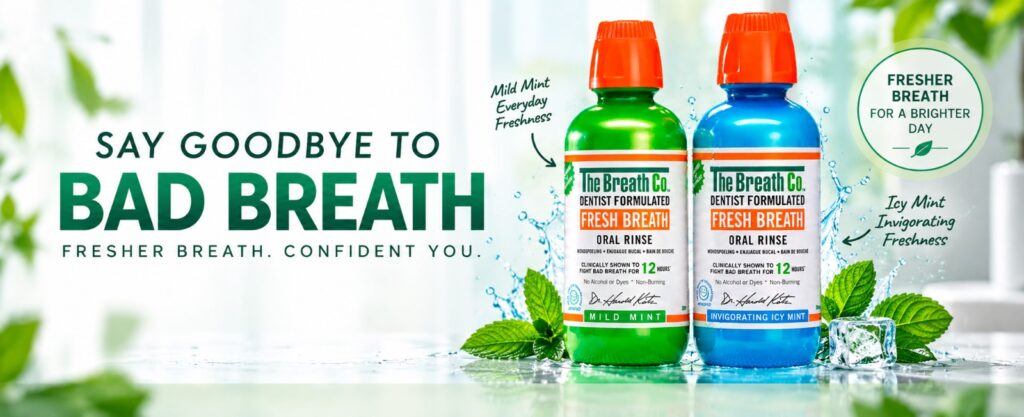
The Breath Co. Dentist-Formulated Oral Rinse for Bad Breath is specifically positioned around fresh-breath care and is available in two mint options:
Icy Mint – an invigorating mint flavour for a refreshing experience.
Mild Mint – a gentler mint option for everyday freshness.
The Breath Co. says its oral rinses use active oxygen and xylitol and are designed to provide long-lasting freshness.
Explore The Breath Co. Bad Breath Oral Rinses
How to Choose the Right Mouthwash for Bad Breath
When choosing a mouthwash for bad breath, consider what you want from your oral care routine.
Look at:
The purpose of the mouthwash
Its ingredients and formulation
Whether it is suitable for your everyday routine
The recommended usage instructions
Your individual oral care needs
The Breath Co. offers different formulations and flavours, allowing you to choose between Icy Mint and Mild Mint for bad-breath care. It also offers Healthy Gums Oral Rinse in Clean Mint and Sparkle Mint for those looking for a product focused on gum health and fresh breath.
Discover The Breath Co. Oral Care Range
Is Mouthwash Enough to Stop Bad Breath?
No. Mouthwash should be part of a complete oral hygiene routine, not a replacement for it.
For better everyday oral care:
Brush your teeth twice a day.
Clean between your teeth daily.
Clean your tongue regularly.
Drink enough water.
Use mouthwash as directed.
Visit your dentist regularly.
Combining these habits can help keep your mouth clean and support fresher breath.
Why Do I Have Bad Breath in the Morning?
Morning bad breath is common.
While you sleep, saliva production naturally decreases. This can allow bacteria and odour-causing compounds to accumulate in your mouth.
Brushing your teeth, cleaning your tongue, drinking water, and using an appropriate mouthwash in the morning can help your mouth feel cleaner and fresher.
When Should You See a Dentist About Bad Breath?
Occasional bad breath is normal. However, if you experience persistent bad breath despite maintaining good oral hygiene, it may be worth speaking with a dental professional.
Bad breath can sometimes be associated with oral health concerns such as gum problems, tooth decay, plaque buildup, or dry mouth.
Fresh Breath Starts With a Consistent Routine
Getting fresher breath isn’t simply about masking an unpleasant odour. A consistent oral care routine can help address the everyday factors that contribute to bad breath.
Brush, floss, clean your tongue, stay hydrated, and choose a mouthwash that fits your oral care needs.
Ready to make fresh breath part of your daily routine? Explore The Breath Co.’s dentist-formulated oral rinses and find the right addition to your oral care routine.
Frequently Asked Questions About Bad Breath
What is the main cause of bad breath?
One of the most common causes of bad breath is the buildup of bacteria in the mouth, particularly on the tongue, teeth, and around the gums.
Does mouthwash help with bad breath?
Yes. Depending on its formulation, mouthwash can provide additional fresh-breath support and may help address factors associated with unpleasant mouth odour.
What is the best mouthwash for bad breath?
The right mouthwash depends on your individual needs. The Breath Co. offers dentist-formulated oral rinses for bad breath in Icy Mint and Mild Mint flavours.
Can mouthwash replace brushing?
No. Mouthwash should complement brushing, flossing, and tongue cleaning rather than replace them.
Why do I have bad breath even after brushing?
Bacteria on the tongue, food trapped between teeth, dry mouth, plaque buildup, and gum problems can all contribute to bad breath even when you brush regularly.
How can I prevent bad breath?
Brush twice a day, floss daily, clean your tongue, drink enough water, use an appropriate mouthwash, and maintain regular dental check-ups.
SEO title:
Bad Breath: Causes, Prevention & How Mouthwash Can Help
Meta description:
Learn what causes bad breath, how to prevent it, and how mouthwash can help. Discover simple oral care tips and The Breath Co. fresh-breath solutions.
Suggested URL:
/blogs/oral-care/bad-breath-causes-prevention